

Matching Hardwood Floors with Wood Stairs: Tips for a Cohesive Seattle-Area Home
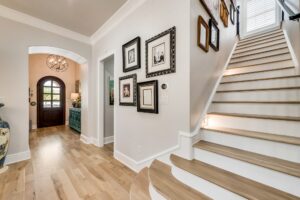
When hardwood flooring meets a staircase, small differences in color, grain, and finish can become surprisingly noticeable. If you are updating floors in a two-story home, planning the floor and stairs together can make the transition feel intentional rather than pieced together.
At Haight Carpet & Interiors, we help you make coordinated hardwood choices for homes in Tacoma, Woodinville, and throughout the greater Seattle area. The goal does not always have to be a perfect match. In many homes, thoughtful coordination produces a more natural and attractive result.
Decide Whether You Want to Match or Coordinate
Your first decision is whether the stairs and flooring should look nearly identical or simply complement one another.
A close match can create a streamlined appearance, particularly when the staircase is highly visible from your entryway or main living area. Using similar wood tones, grain characteristics, and finishes helps the two surfaces read as one continuous design.
Coordination gives you more flexibility. You might use a slightly different wood tone on the stairs while keeping the undertones consistent with the floor. This approach can be useful when you are keeping an existing staircase while replacing the surrounding flooring.
As you compare hardwood flooring options, look at samples beside the stairs rather than evaluating the flooring by itself.
Start with the Wood Species
If you want your floors and staircase to look closely related, wood species is an important consideration.
Different species can vary in grain, natural color, and the way they respond visually to a finish. Trying to create an exact color match between two noticeably different woods can yield an inconsistent result because the underlying grain and natural characteristics remain visible.
When an exact species match is not practical, concentrate on creating harmony. Similar undertones and compatible grain character can help two surfaces coexist without pretending they are identical.
This distinction matters particularly when you are updating floors in an existing Seattle-area home where the staircase may be original to the property.
Pay Attention to Undertones, Not Just Color
Two woods can both be described as “brown” and still clash.
One might lean warmer, with golden or reddish undertones, while another could appear cooler or more neutral. These differences are often easier to see once large areas of flooring are installed.
Before choosing your hardwood, compare samples directly against:
- Stair treads
- Risers
- Handrails
- Newel posts
- Nearby cabinetry
- Baseboards and trim
Look at the materials together during different times of day. Natural and artificial lighting can shift how wood tones appear, so a combination that looks coordinated under one light source may look different elsewhere.
Consider Grain and Natural Variation
Color is only one part of matching wood surfaces. Grain pattern and natural variation can make an equally strong impression.
If your existing staircase has prominent grain and noticeable natural character, a highly uniform floor may create a sharper contrast. Conversely, a floor with significant knots and tonal differences may look visually busy next to a very consistent staircase.
Neither combination is inherently wrong. The question is whether you want a smooth transition or intentional contrast.
It helps to view several flooring boards together instead of relying on a single sample. A larger view gives you a better sense of how much variation will appear across the finished floor.
Keep Sheen Levels in the Conversation
Even when the wood colors are closely coordinated, different sheen levels can make stairs and floors look less connected.
For example, a glossy staircase beside a low-sheen floor may reflect light very differently. The color might be similar, but the surfaces can still appear noticeably separate.
You do not necessarily need identical finishes. Instead, consider how the sheen levels interact and whether the contrast feels deliberate.
Because staircases often receive light from multiple directions, compare both surfaces from the viewpoints you use most often.
Think About the Transition at the Top and Bottom
The point where hardwood flooring meets the staircase deserves careful planning.
A staircase visible from an entryway often becomes an architectural feature, while an upstairs landing can make the relationship between flooring and stair components particularly noticeable.
Think beyond individual boards and consider the complete sightline. Ask yourself what you will see when approaching the stairs from the living room, standing at the bottom, and reaching the upstairs landing.
Professional planning through flooring and installation services can help you consider these transitions alongside the requirements of your selected hardwood product.
Use Other Elements to Create Continuity
Your flooring and stair treads do not have to carry the entire responsibility for making the interior feel connected.
Other elements can help bridge subtle differences, including:
- Coordinated handrails
- Consistent trim colors
- Complementary wall colors
- Repeated wood tones in furniture
- Carefully chosen rugs nearby
The goal is to establish a visual relationship throughout the space rather than force every wood surface into an exact match.
Evaluate Samples in Your Actual Home
Your home’s lighting has a major influence on hardwood. That makes an in-home comparison particularly useful when you are coordinating new flooring with an existing staircase.
With the Shop at Home service, you can evaluate flooring samples beside the stairs and surrounding finishes. Look at your options from several angles, including the entryway and upstairs landing.
This gives you a more realistic impression than comparing two materials under showroom lighting alone.
Create a Hardwood Plan That Connects Both Levels
Matching hardwood floors with wood stairs is less about finding two surfaces that look identical and more about creating intentional continuity. Species, undertones, grain, natural variation, finish, and surrounding materials all contribute to the final appearance.
If you are planning a hardwood flooring project, request a free estimate to discuss how new flooring can coordinate with your staircase and existing interior.
You can also visit our Tacoma and Woodinville locations to compare hardwood selections in person. By considering the staircase from the beginning of your project, you can create a Seattle-area home where the flooring flows naturally from one level to the next.